George Morris
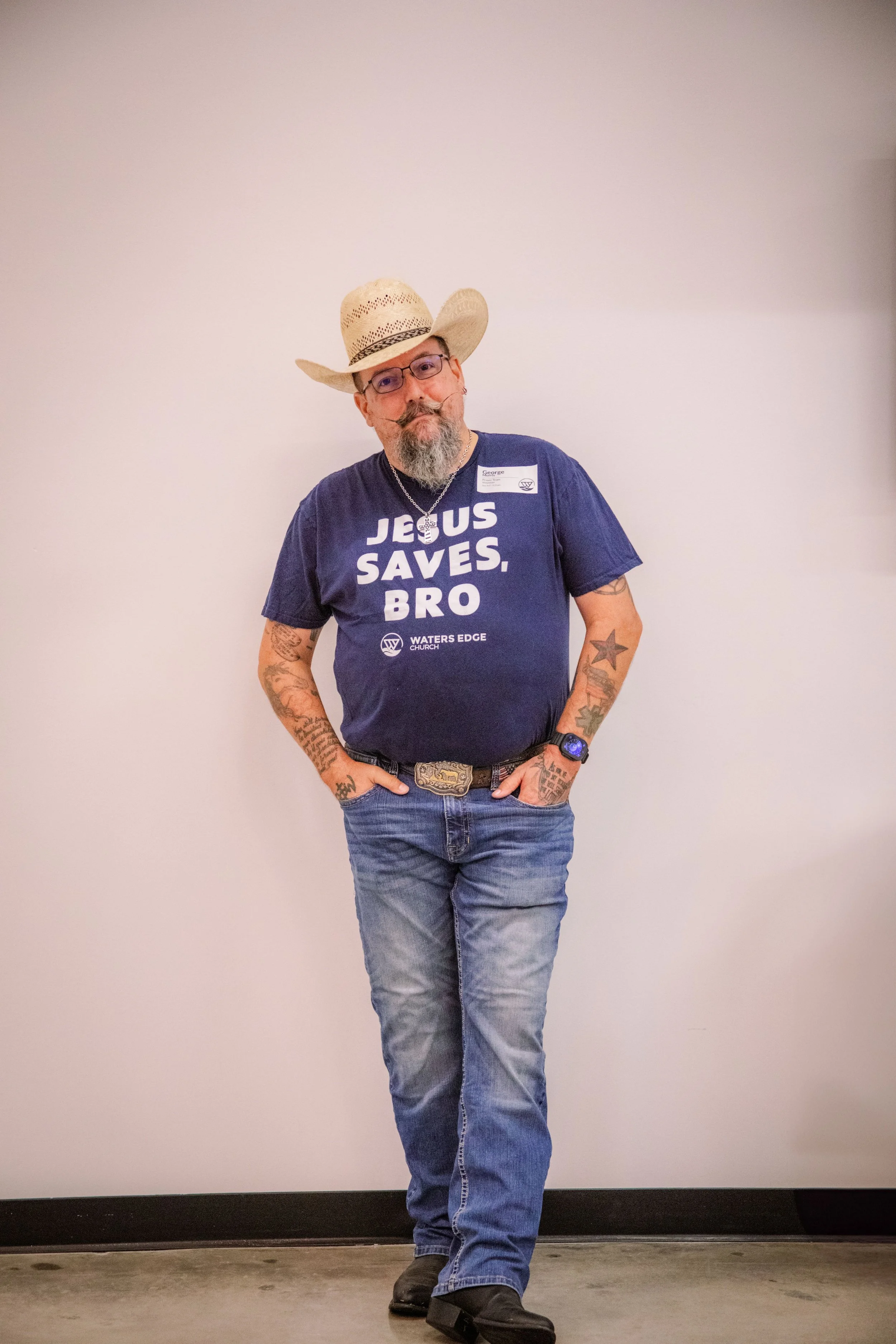
There were moments in my life when I lost my faith, lost my health, and nearly lost my life. There were even times when I questioned whether my story still mattered… or if God still had a plan for someone like me.
But, looking back now, I can say this with complete certainty: God was not finished with me. As a child, especially during my elementary school years, I attended church almost every week with my grandparents. Those are some of my earliest memories of faith. But as I grew older and reached middle school, life became busier.
My family found less and less time for church, and before long, it simply wasn’t part of our routine anymore. Over time, peer pressure and people forcing their beliefs on me pushed me further away from faith.
Looking back now, I can see something clearly: even when I drifted away, God never gave up on me. Like many teenagers, I was surrounded by temptations. Drugs, gangs, and the pressure to fit in were all around me. So I ran from them. Literally.
I ran long distances. Running became my outlet, but it also became something more than that. It gave me discipline, direction, and something positive to pour my energy into. Before long, I discovered something I didn’t expect—I actually loved it.
While attending Dover High School, I excelled in long-distance running and became one of the top 5K and two-mile runners in the state of New Jersey. That success eventually earned me a college scholarship. College, however, did not go the way I expected. I struggled socially and had a difficult relationship with my coach.
Over time, that tension robbed me of the joy I once found in running. After pulling my hamstring, my scholarship was revoked. And in an instant, the one thing that had once helped keep my life on track—running—was gone.
Losing that dream hit me hard. I fell into a deep depression, began drinking heavily, and eventually dropped out of college, returning home feeling like I had disappointed both my parents and myself. For about a year after leaving college, I bounced from job to job trying to find direction and purpose in my life. During that time, I also found myself drifting back toward some of the same temptations I had once run from.
It was during that time that I realized something had to change. I found myself searching for direction, discipline, and a purpose bigger than the life I was living. That search eventually led me to a decision that would change the course of my life.
I joined the United States Navy, and on October 21, 1991, I shipped off to boot camp. Joining the Navy wasn’t just about changing my circumstances; it was a decision to build a career I could be proud of. Even more than that, I felt a deep desire to be part of something bigger than myself. At the time, I didn’t fully understand what that desire meant. But looking back now, I realize God was already planting something in my heart.
While stationed in Connecticut in 1994, I met Teresa. At that time, we were simply good friends and had no idea what the future would hold. She was separated and in the process of divorcing her first husband and eventually decided to move back home closer to her parents to start over. Around that same time, I received orders transferring me to San Diego in November of 1996.
Life took us in different directions, but we stayed in touch online from time to time. Life in San Diego had its own challenges. During that time, I fell into the trap of predatory loans that often target young service members. Before long, I found myself facing serious financial trouble.
I worked hard to repay those debts and get my life back on track. During that time, I met someone special, and as we spent more time together, we began talking about our future — where we might live, the kind of life we wanted to build, and everything that lay ahead. Before long, we decided we wanted to spend our lives together, and we got engaged.
For the first time in a long while, it felt like my life was finally moving in the right direction. My finances were back on track, my Navy career was progressing, and it seemed like everything was finally coming together. But less than a month after getting engaged, everything changed.
My Navy unit had traveled to Washington State to conduct at-sea testing on a submarine as part of a special project. Just before that trip, my fiancée and I had taken a short trip to Mexico. Not long after arriving in Washington, I started feeling sick. At the time, I assumed it must have been something I picked up on that trip — maybe food poisoning or a stomach bug from Mexico.
But the sickness didn’t go away. Instead of getting better, it kept getting worse. Before long, it was clear something was very wrong. On May 6, 1999, I was sent to Bremerton Naval Hospital in Bremerton, Washington, so doctors could run tests to find out what was going on. While I was waiting for the results of those tests, I suddenly went into a seizure and blacked out. The last thing I remember hearing was a nurse saying, “Oh great… what do we do now?”
For the next three weeks, my life simply went blank. The next thing I remember is waking up on May 26, 1999. In my mind, it was still May 6. I had no idea that three weeks had passed. Then the doctors began explaining what had happened. The infection that caused my brain injury was herpes simplex encephalitis — a rare viral infection that attacks the brain.
Doctors later told me that only about ten percent of people survive it. In other words, by every statistic, I shouldn’t have been there. After the seizure, I was transferred to Madigan Army Medical Center in Tacoma, Washington, where they had more specialized care. My fever had climbed so dangerously high that doctors had to transport me in a tub of ice just to try to bring my body temperature down. Later, the doctors told me my temperature had risen past 110 degrees, and the pressure in my spinal fluid was two to three times the lethal level.
Eventually, I regained enough strength to walk again. Being able to walk was the final milestone before doctors would allow me to be transferred back to San Diego for continued care. When the day finally came for me to be transferred, the staff asked if I would walk down the hallway and through the hospital doors instead of being wheeled out. I remember feeling excited more than anything else. After being in the hospital for weeks, I was finally heading back to San Diego — back to my fiancée and back to the life I was trying to rebuild.
Because of that, I wasn’t paying much attention to what was happening around me in the hallway. I didn’t realize it at the time, but something very meaningful was happening around me. Every member of my medical care team who had been involved in my recovery was gathered in the hallway watching. Some were smiling. Some were quiet. A few were taking photographs.
After I walked through the doors, the nurse who had walked beside me finally explained why everyone had been gathered in the hallway. They never expected me to walk through those doors. Many of them believed the only way I would ever pass through those same doors was being wheeled out on a stretcher… covered with a sheet. That moment stayed with me long after I left that hospital. I didn’t fully understand it at the time, but looking back now I see it for what it was — a mountain-top moment in my recovery.
After leaving Washington, I returned to San Diego to continue my recovery. When I returned, doctors informed me that the brain injury and the seizures I had experienced were considered service-disqualifying injuries. Because of that, I was placed on 18 months of limited duty, and after that period, I would be medically retired from the Navy.
Recovery was slow and frustrating. I struggled with severe short-term memory loss and carried a steno pad everywhere because it became my way of remembering things. If I didn’t write something down immediately, it was gone. I had to relearn basic math and even teach myself how to ride a bicycle again — things most children learn when they are young.
The bike was especially frustrating for me. Before the injury, I used to ride a mountain bike more than twenty miles a day. After the injury, I couldn’t even make it across a parking lot. The neurologist who took over my care refused to provide any physical, emotional, or occupational therapy. Despite my repeated pleas, he insisted I was fine and that I was simply imagining my problems.
During that time, the woman I had been engaged to stayed by my side and supported me through my recovery. With my medical condition and her upcoming deployment, we decided not to wait any longer and moved our wedding forward, getting married sooner than we had originally planned. While she was deployed, she eventually told me she had been unfaithful. The news hit me like a punch in the gut.
The emotional stress of that moment began triggering seizures, and I found myself back in the hospital multiple times. During that time, her command gave her several opportunities to return home and care for me while I was hospitalized. Each time I ended up back in the hospital, I waited and hoped she would walk through the door. She never did.
When her deployment finally ended and she returned home, she left almost immediately, saying she could not deal with my medical issues anymore. Our marriage ultimately ended in divorce. From the day I became sick, to learning that I would be losing my Navy career, to losing my marriage — all of it happened in less than one year.
During that time, I found myself arguing with God more than praying to Him. I kept asking the same question over and over again: “Why?” Why my health? Why my marriage? Why my Navy career? Nothing made sense to me anymore. I was angry and felt completely abandoned. Everything I had worked so hard for seemed to be falling apart all at once.
During my final months in the Navy, I was in and out of the hospital after multiple suicide attempts — choices born out of pain that I now look back on with deep regret. During that same period, Teresa and I were still talking occasionally. When she didn’t hear from me for a while, she became concerned that something might have happened. Fearing that I may have attempted suicide, she contacted the local police and asked them to perform a welfare check on me.
When I found out what she had done, I overreacted. At the time I was angry and embarrassed, and instead of recognizing that she was simply trying to make sure I was safe, I pushed her away. After that, we stopped talking for almost two years. At the time I didn’t realize it, but even in that darkness God had not abandoned me. Looking back now, I can see the truth of 1 Corinthians 10:13:
“No temptation has overtaken you except what is common to mankind. And God is faithful; He will not let you be tempted beyond what you can bear. But when you are tempted, He will also provide a way out so that you can endure it.”
Even when I couldn’t see a way forward, God was already providing one. And in that same season, I was living the truth of 2 Corinthians 12:10: “For when I am weak, then I am strong.”
After being retired from the Navy in January 2001, I moved home to New Jersey to live with my father, where I also trained as an EMT. Helping people through their darkest moments began rebuilding my own life. In the middle of all the loss I had been through, I started to rediscover something I thought I had lost — a sense of purpose.
Then came a September morning that none of us will ever forget. That morning, my partner and I quickly realized that help would be needed everywhere. We were dispatched toward Jersey City along with many other emergency units responding to the unfolding crisis. As we drove toward Jersey City, we passed the Giants Stadium. It was the first time that day my partner and I could clearly see the New York City skyline. And in that moment, we watched the second tower collapse.
Eventually, we were directed to Liberty State Park, where more than two hundred emergency units had gathered. We helped establish triage areas and a temporary morgue. Throughout the day, we cared for exhausted firefighters and police officers rotating out of Manhattan for breaks, many of them covered in dust and debris.
We also rotated through assisting at the morgue. In the middle of all that darkness, something slowly became clear to me. Serving others in their worst moments had a way of bringing light into my darkest places. At the time, I didn’t fully understand it, but looking back now, I can see that God was already beginning to show me what it meant to serve others.
Several months later, I transported an eighteen-year-old college freshman who had suffered a serious head injury. She believed her life was over and that she would never walk again. During the ride, I shared my own story with her — how my life had suddenly changed and how I had to fight just to relearn things most people take for granted. I told her that even though life might never look the same again, it didn’t mean it was over.
A week later, I saw her again. This time, she was walking. She came over to thank me and told me that hearing my story had opened her eyes. In that moment, something clicked inside me. For the first time, I began to realize that maybe the struggles I had been through weren’t meaningless. Maybe my story could actually help someone else find hope.
I didn’t know it then, but God was already preparing the next chapter of my life. Not long after that, I injured my knee while helping rescue someone from a motor vehicle accident. That injury eventually required surgery. While recovering from that surgery, Teresa and I began talking again.
The last time we had spoken years earlier, I had been going through a very difficult time after my marriage ended. When Teresa became concerned about my health and contacted the local police to perform a welfare check on me, I overreacted. Looking back now, I realize I had been overly sensitive because of everything I was dealing with at the time, especially the struggles surrounding my health and the suicide attempts I had been through.
When we reconnected, one of the first things I did was apologize to her for the way I had reacted. Around that same time, I had to travel to a Naval Medical Center for a disability review. When I realized the trip would bring me close to where she lived, I turned it into a small vacation so I could visit her. What started as two old friends catching up quickly began to feel like something more.
Before long, we both realized that the friendship we had shared years earlier had grown into something much stronger. Before I ever proposed, something kept running through my mind. Teresa actually had more to lose than I did if we decided to start a relationship. She had herself and two children to think about, while I was a single guy with no kids and already divorced. But I also knew I was carrying a lot of baggage into that relationship — the scars from my brain injury, the loss of my Navy career, the end of my first marriage, and everything that had happened in the years leading up to that moment.
By choosing to let me into her life, Teresa was opening herself up and allowing herself to be vulnerable again. That meant a lot to me, and I knew it was something I could never take lightly. Early on, I understood that Teresa’s two children were part of the package, and I gladly accepted that responsibility. I knew that if I wanted to be part of her life, I also needed to earn the trust and approval of her children.
I also had to win the approval of her parents, who were understandably protective because of what she had gone through with her previous husband. When the time came, I didn’t just propose to Teresa. In my heart, I was committing myself to all three of them and to the family we would build together. Both Teresa and I had experienced our first marriages beginning with simple elopements before a Justice of the Peace. This time we wanted something different. We wanted a real wedding ceremony that honored God, and we wanted to share that moment with our families and close friends — something neither of us had experienced the first time.
As we began looking for a place to hold the ceremony and someone to officiate it, our search eventually led us to Nelson Chapel, where we met Chaplain Fred Hilder. I’ll be honest — I was still very apprehensive about stepping back into a church. Because of my past and everything I had been through, I honestly didn’t think someone like me would feel comfortable in a church without being judged.
But after hearing our story, Fred smiled and said something I will never forget: “As long as you believe in Jesus and can honestly say you are a Christian, I’ll marry you on the roof of a gas station.” In that moment, the walls I had built up around church and faith for so many years finally began to come down. Fred became much more than just the pastor who was going to marry us. He became a counselor, a mentor, and a friend.
He spent time guiding Teresa and me through premarital counseling, and he also spent time mentoring me as I began rebuilding my walk with Christ. During those conversations, he helped me understand what it really meant to step into what he called a “ready-made family.” If I was going to marry Teresa, I wasn’t just committing myself to her — I was committing myself to her children as well.
As part of that counseling, Fred also required us to find a church we could call home. After spending time at Nelson Chapel, we found a sense of comfort and belonging there, and we decided to begin attending regularly. About a month before our wedding, the weight of everything I had been through began to catch up with me. The stress of planning the wedding, adjusting to becoming a father, and memories of the struggles I had faced in San Diego all came crashing down at once.
One day Teresa found me curled up in the corner of our walk-in closet, overwhelmed and breaking down. In that moment, she had every reason to walk away. She could have called the wedding off and sent me out the door. She had herself and two children to protect, and she could have decided that bringing someone with my past and my struggles into their lives was simply too much risk. Instead, she gathered me up and made sure I got the help I needed.
I ended up spending about a week in the hospital, and Teresa showed up every day. In that moment, she showed me more grace than I felt I deserved. That’s when I realized something about Teresa: she wasn’t going anywhere. She was willing to walk through the fire with me if that’s what it took.
May 17, 2003, Teresa and I were married. But during the ceremony, I didn’t just exchange vows with Teresa. I also wrote and spoke vows directly to her children, promising that I would love them, protect them, and be the father they needed me to be. Not long after that, the staff at Nelson Chapel approached us with something that surprised both of us. They asked if we would be willing to teach a Sunday school class for children from kindergarten through third grade.
We were shocked. We were still very new in our faith and didn’t feel qualified to teach anyone. But they reassured us by saying something that stuck with me: “What better way to learn about faith than by teaching it and watching it grow in children?”
Around that same time, Teresa and I made another important decision. We chose to fully re-dedicate our lives to the Lord. Not long after our wedding, we stepped into the baptismal waters together and were baptized by the same pastor who had married us — Chaplain Fred Hilder. In that moment, it felt like we were doing more than just being baptized. It felt like we were committing ourselves to building our marriage and our family on a foundation of faith.
Even though my faith was growing again, I was still carrying a lot of the weight of my past. The pain, the anger, and the memories of everything that had happened in the years before were still there. Sundays were often the only time I truly felt peace.
Then, in September of 2003, during a communion service at Nelson Chapel, while sitting quietly in my seat, something inside me began to change. The worship that morning and the message Fred was preaching both seemed to speak directly into the struggles I had been carrying. His message talked about how God sometimes places things in our lives to help us carry the weight of the pain we’ve been through.
As I sat there holding the bread and the cup, my mind began going back through everything that had happened in my life — the illness, the coma, losing my Navy career, the divorce, and the anger I had carried for so long. In that moment, I began having an internal conversation with God. I remember quietly apologizing to Him for pushing Him away earlier in my life. I told Him I was tired of carrying all that weight and anger. And in that moment, it felt as if God was speaking directly to my heart.
The message was simple: “Use your experiences. Don’t let them weigh you down. Even though you fell away early, accept me again.” And sitting there quietly in that pew, I remember answering Him: “Okay, Lord… I’m ready.”
For the first time in many years, I felt the burdens of my past begin to lift. After class that day, while Teresa and I were finishing up with our kindergarten through third-grade Sunday school class, a little girl named Emily walked up to me. Without saying much, she simply wrapped her arms around me and quietly said, “Thank you.”
In that moment, I just stood there for a second, trying to process what had just happened. And the only way I can describe it is this: “It felt like two hugs at the same time — one from that little girl, and one from God.” That moment led me to a declaration I later had tattooed on my arm: “You will forever be limited by your disability only if you allow your disability to forever limit you.”
Teresa became my strongest advocate as I continued navigating the effects of my brain injury, and I stood beside her through her own health struggles as well. Over the years, we have stood by each other through many of life’s challenges — health concerns, the normal stresses of everyday life, family struggles, and the loss of loved ones. Through all of it, we learned to lean on each other and trust that God would carry us through whatever came our way.
In 2007, we were blessed with another child. In 2018, we were blessed with a granddaughter. By God’s grace, I have spent more than twenty years working at Newport News Shipbuilding, working aboard the same types of ships I was once told I would never step foot on again.
“I can do all things through Christ who strengthens me.” — Philippians 4:13
Over the years, I have held a lot of different jobs in my life — sailor, EMT, shipyard inspector, husband, father. But the greatest role God has given me is the opportunity to be a witness for Him and share what He has done in my life.
More recently, in January of 2025, I had the honor of caring for my father during the final week of his life. It was one of the most difficult weeks I have ever experienced, but it was also one of the most meaningful. During that time, I relied heavily on my faith and on the Lord for strength.
I even relied on Him to guide me as I prepared and delivered my father’s eulogy. My father was not an overly religious man, but while I was caring for him, I began reflecting on the way he had lived his life. And I realized something that had been right in front of me all along. My father had been living his life exactly the way Micah 6:8 describes: “To act justly, to love mercy, and to walk humbly with your God.”
That was the kind of man he was. He believed in doing the right thing, helping people when they needed it, and never expecting recognition in return. In that moment, I realized just how much his quiet example had influenced the man I had become. Looking back now, I see that the same lesson my father lived quietly every day was the very lesson God had been teaching me through my struggles — that our circumstances may challenge us, but they never define who we are or how we choose to live.
Only later did I begin to see how God’s hand had been guiding my life all along, even in moments when I couldn’t understand what He was doing. Today, Teresa and I attend Waters Edge Church, where we serve and volunteer regularly. Years ago, during our premarital counseling, Chaplain Fred Hilder encouraged us to find a church that we could truly call home. Over time, we found that home at Waters Edge, and we have fully embraced the mission of that church: “To change the way people think about church!”
God also gave me something else I never expected to love as much as I do: the church. Not a building. Not a program. But a place where ordinary, imperfect people come together and find hope. A place where broken stories start to get rewritten. A place where people discover that God isn’t finished with them yet.
That’s what church became to me. Looking at our life today, it still amazes me. God took two broken people with a lot of scars and a lot of past, brought us together, and turned our story into something far greater than either of us could have imagined. What started as two wounded lives trying to rebuild became a marriage built on faith, forgiveness, and love. And even today, after everything we’ve been through, the fire that brought Teresa and me together still burns strong in our hearts.
We are living proof of what God can do when two people place their faith and trust in Him. But even years after my recovery, there was still one part of my story that had never made sense to me — one piece that had always felt unfinished. In 2005, during my final disability review at a Naval Medical Center, something happened that finally brought closure to a chapter of my life that had always bothered me.
The neurologist who walked into the exam room that day seemed confused as he looked through my chart. He paused, scratched his head, and quietly said under his breath, “No way this is him.” Then he looked up at me and asked a question I wasn’t expecting. He asked if I remembered being evaluated by two young interns when I first returned to San Diego after my illness in 1999. I told him that I did remember that visit.
Then he asked me another question. He asked if the neurologist who took over my care afterward had ever provided any therapy for my recovery. When I told him no, he shook his head and explained something that completely surprised me. He told me that he had been one of the young interns who evaluated me back then.
Both he and the other intern had strongly recommended several forms of therapy for my recovery, but the neurologist in charge had refused to follow their recommendations. He apologized for what I had endured and told me they had fought for my care at the time. That day, he corrected my records and ensured my retirement from the Navy was finalized properly. For me, it was a moment of unexpected closure.
When I look back over everything God was doing in those years, I also see one of the greatest blessings He placed in our lives: Chaplain Fred Hilder. Fred passed away in 2018 after a battle with cancer, but the seed he planted in Teresa and me continues to grow today. Years ago, he invested in a young couple who were still trying to figure life out. He counseled us before our marriage, mentored me in my walk with Christ, and helped prepare me for stepping into what he called a “ready-made family.”
At the time, we had no idea how much that guidance would shape the rest of our lives. But the seed he planted never stopped growing. Looking back now, I realize something powerful. When I joined the Navy, I said I wanted to be part of something bigger than myself. At the time, I thought that meant serving my country. But today, I understand it meant something even greater. Serving God.
And when I look back at my life now, I see something I never could have planned myself. If you remember… I entered the hospital on May 6, 1999. I woke from the coma on May 26, 1999. Years later, Teresa and I chose May 17, 2003 as our wedding date, completely unaware that God had already been writing a deeper meaning into that day. Only later did I realize that the date falls exactly in the middle of the twenty days I spent in a coma.
The very period of time that once held some of the darkest days of my life… became the place where God chose to give me one of the happiest days of my life. That was the day Teresa, her children, and I began our life together as a family. God didn’t erase the past. He redeemed it.
I truly believe the words of Romans 8:28: “And we know that in all things God works for the good of those who love Him and are called according to His purpose.”
Before I finish, there is one person I want to thank. Teresa has walked beside me through some of the hardest seasons of my life. When I was struggling, when my health was uncertain, and when many people might have chosen to walk away, she stayed. She showed me more grace than I ever felt I deserved and helped me rebuild a life that once felt completely broken.
Even today, she continues to walk beside me through whatever life places in our path. I will always be grateful for the love, patience, and faith she has shown me.
Looking back now, I realize something I didn’t understand during those dark years. There was a time in San Diego when I argued with God and walked away from Him, convinced I could handle life on my own. But even then, even in my anger and stubbornness, God had not walked away from me. God was not finished with me yet.
Looking back now, I realize my life has really been a series of choices — some good, many not. But over time the words of Joshua became real to me: “Choose this day whom you will serve… but as for me and my house, we will serve the Lord.” By God’s grace, that is the choice I try to make every day.
I’m reminded of the story of Lazarus. Everyone around Lazarus thought the story was over. The tomb was sealed. Hope was gone. But Jesus stood outside that tomb and called him out. In many ways, I believe God was calling me out of a tomb I had built for myself. And sometimes the moment we think our story is over… is the very moment God is calling us to step out of the tomb.
So if you’re hearing my story today and you’re carrying pain or regret or mistakes you wish you could erase… I want you to hear something. If God could take a man who nearly died, lost his career, lost his marriage, and was angry enough to argue with Him… and turn that life into something meaningful again… then He can do the same thing for you.
Because the truth is simple. God was not finished with me then. He is not finished with me now. And He is not finished with you either. And today, as I look back over my life, I realize the words Paul wrote in Galatians describe my story better than I ever could:
“I have been crucified with Christ, and I no longer live, but Christ lives in me. The life I now live in the body, I live by faith in the Son of God, who loved me and gave himself for me.” — Galatians 2:20